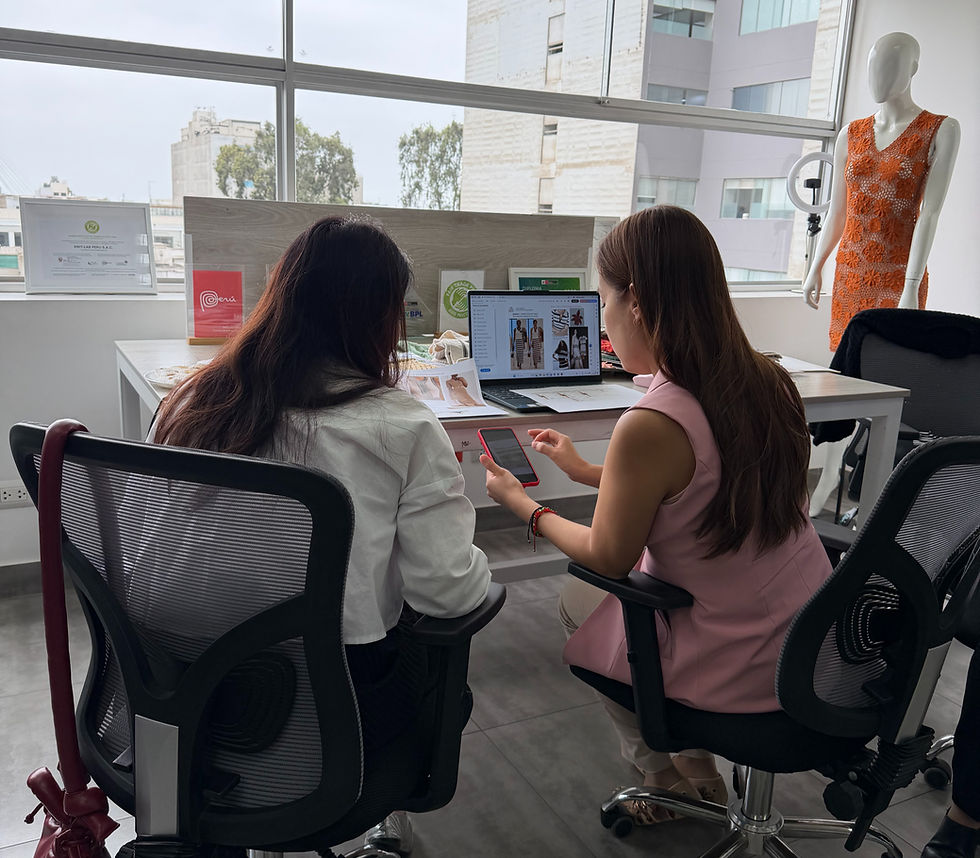
The Role of Peruvian Knitwear Artisans

What are Peruvian knitwear artisans?
Peruvian knitwear artisans are skilled textile experts who combine traditional craftsmanship with modern production to create high-quality garments.
Why are they important in the global supply chain?
They play a critical role in the global supply chain by ensuring quality, authenticity, and consistency in premium knitwear production.
What makes Peruvian knitwear unique?
Peruvian knitwear stands out for combining artisan expertise, premium fibers, and sustainable production practices.
Introduction: Craft at the Heart of Knitwear
Behind every high-quality knitwear piece lies a combination of technique, material knowledge, and craftsmanship. In Peru, knitwear artisans play a fundamental role in maintaining the country’s reputation as one of the world’s leading sources of premium knit garments. Their expertise connects centuries-old textile traditions with modern manufacturing processes, making them a trusted Peruvian knitwear manufacturer and ensuring that Peruvian knitwear is both culturally rich and commercially competitive.
For fashion brands seeking authenticity, quality, and ethical production, understanding the role of Peruvian knitwear artisans is key to appreciating why Peru remains such a strategic partner for knitwear sourcing.

A Heritage of Textile Knowledge
Peru’s textile heritage dates back thousands of years to pre-Columbian civilizations, where weaving and knitting were already highly developed crafts. Over generations, artisans have passed down techniques for handling natural fibers such as alpaca, cotton, and wool.
This deep familiarity with fiber behavior, how it reacts to tension, temperature, and different knit structures, allows artisans to achieve results that machines alone cannot replicate.
Today, this heritage is still present in many knitwear workshops and production environments. Even when industrial knitting machines are used, skilled artisans remain essential in supervising processes, correcting imperfections, and ensuring that the final garment meets premium standards and international quality control standards.
Technical Skill and Attention to Detail
Knitwear production involves more than simply operating a machine. It requires an understanding of stitch density, yarn quality, finishing techniques, and garment construction.
Knitwear specialists in Peru bring a high level of precision to these processes and bring a high level of precision to these processes. Their work often includes:
Monitoring knitting machines to maintain consistent stitch quality
Hand-finishing garments for a refined appearance
Managing delicate fibers such as alpaca or pima cotton
Executing complex knit structures like cables, ribs, and textured patterns
This attention to detail aligns with global quality benchmarks and is especially valuable for brands competing in the premium segment of the textile industry.
How Do Artisans Bridge Tradition and Modern Production?
One of the most unique aspects of Peru’s knitwear industry is the way traditional knowledge integrates with contemporary manufacturing technology.
Modern factories use advanced knitting machines and efficient production workflows, yet they continue to rely on Peruvian handmade knitwear artisans for crucial stages of development and quality control. Artisans often collaborate closely with designers and technicians to interpret patterns, test samples, and adjust garments for optimal fit and structure.
This hybrid model, artisan expertise + industrial efficiency, positions Peru competitively against other global textile hubs.

Supporting Ethical and Sustainable Production
Another important dimension of Peruvian knitwear artisanship is its connection to responsible production and sustainable fashion.
Many artisans work within local communities where textile craftsmanship provides stable employment and preserves cultural heritage. This aligns closely with principles of fair trade and long-term social sustainability.
Additionally, Peru’s knitwear industry increasingly incorporates:
Traceability in fiber sourcing
International textile certifications such as GOTS and OEKO-TEX
Natural fibers with lower environmental impact
Compared to fully automated mass production in other countries, this model offers greater transparency and accountability.
Why Artisans Matter for Global Brands?
For fashion companies developing knitwear collections, artisans bring capabilities that are difficult to replicate elsewhere. Their expertise improves product development, ensures consistent quality, and enhances the overall value of the garment.
Brands that work with Peruvian knitwear specialists benefit from:
Deep knowledge of premium natural fibers
Skilled craftsmanship in complex knit structures
Reliable quality control throughout production
Authenticity linked to Peru’s textile heritage
Alignment with global sustainability and sourcing standards
Peruvian knitwear offers a competitive advantage by balancing craftsmanship, scalability, and responsible production, something not all manufacturing hubs can achieve.
Peru vs Other Textile Hubs
Unlike large-scale manufacturing countries focused on volume, Peru differentiates itself through:
Higher craftsmanship vs mass production
Stronger integration of artisans in production
Greater emphasis on natural fibers and sustainability
More transparent sourcing practices
This makes Peru particularly attractive for premium and mid-luxury fashion brands.
Connecting Brands with Peruvian Expertise
As global demand grows for high-quality knitwear, the role of Peruvian artisans continues to be central to the industry’s success. Their craftsmanship ensures that Peru remains a trusted partner for fashion brands seeking premium knit production.
Companies like Knitlab Peru help bridge the gap between international brands and local expertise. By connecting design teams with experienced knitwear artisans and manufacturers, Knitlab facilitates the development of knit collections that combine technical excellence, responsible sourcing, and the unique craftsmanship that Peru is known for.
In a global market increasingly driven by sustainability, traceability, and quality, Peruvian artisans are not just contributors, they are a strategic advantage.

Article reviewed by Grace Wouters Huamanchumo, co-founder of Knit-Lab Peru and international knitwear industry specialist with over 10 years of experience working with fashion brands across the U.S., Europe, and Australia. Her expertise in sustainable manufacturing, strategic sourcing, and Fair Trade practices ensures the accuracy and relevance of the content published on this site.