5 Methods for Testing Knitted Fabric: Ensuring Quality, Performance, and Reliability

In knitted textile manufacturing, fabric testing for knitted fabrics is the process of measuring how a textile performs under washing, stretching, abrasion, color exposure, and structural requirements before production. Appearance alone is not enough to guarantee quality.
Whether a fabric is intended for fashion, sportswear, uniforms, or technical applications, it must meet specific performance standards before reaching the market.
For brands and manufacturers, testing knitted fabric is also a risk-control process. Identifying shrinkage, pilling, color transfer, or structural inconsistencies before bulk production can help prevent costly returns, customer complaints, production delays, and inconsistencies between fabric batches.
At Knit-Lab Peru, knitted fabric testing is integrated into the product development and quality control process through standardized sample measurements, washing shrinkage evaluations, bursting strength assessments, color fastness testing, and structural analysis. These processes help manufacturers evaluate fabric performance before production is scaled.
Here are five essential methods for testing knitted fabric and why they matter in commercial textile manufacturing.

1. Dimensional Stability Testing
One of the most common concerns when testing knitted fabrics is their tendency to stretch, shrink, or distort after washing and use. Dimensional stability testing evaluates how a fabric responds to laundering, drying, and other standardized conditions by measuring changes in its dimensions.
During the test, fabric samples are measured, washed according to established procedures, and measured again to determine changes in length and width.
Why it matters for brands and manufacturers
If dimensional stability is not evaluated before bulk production, a fabric may experience unexpected or uneven shrinkage after washing. In a large production lot, this can affect the fit and measurements of an entire collection, creating inconsistencies between the approved sample and the final garment.
This can lead to:
Returns caused by garments no longer fitting as expected.
Customer complaints about shrinkage after the first wash.
Size inconsistencies across a production batch.
Costly rework or rejected garments.
At Knit-Lab Peru, dimensional stability testing helps manufacturers identify potential shrinkage and deformation issues during development, before they become large-scale production problems.
2. Bursting Strength Testing
Unlike woven fabrics, knitted fabrics are constructed from interconnected loops. For this reason, bursting strength testing is a particularly relevant method for evaluating how a knitted fabric withstands pressure applied in multiple directions.
The test measures the amount of pressure required to rupture the fabric when force is applied uniformly to its surface. It is especially relevant for sportswear, activewear, underwear, and other garments subjected to repeated stretching and mechanical stress.
Why it matters for brands and manufacturers
A fabric that does not have sufficient bursting strength may fail during garment use, particularly in areas exposed to repeated movement or tension. Without testing, manufacturers may select a knitted structure that is unsuitable for the product's intended application.
Potential consequences include:
Fabric ruptures during wear.
Product complaints related to premature damage.
Increased quality control issues during production.
The need to replace or reformulate the fabric structure after development.
Knit-Lab Peru conducts bursting strength evaluations to assess the resistance of knitted structures and help manufacturers determine whether a fabric is suitable for its intended end use before production is scaled.

3. Pilling Resistance Testing
Pilling occurs when small fiber balls form on the surface of a fabric due to abrasion during wear, washing, or repeated contact with other surfaces. Pilling resistance testing simulates friction and evaluates how well a knitted fabric maintains its surface appearance over time.
This is particularly important for knitwear because the combination of fiber type, yarn construction, fabric structure, and finishing can influence the development of pills.
Why it matters for brands and manufacturers
Omitting pilling testing can result in garments developing visible fiber balls after the first uses or washes. For a brand, this may lead to widespread customer complaints and product returns, even when the garment initially looks high quality.
Excessive pilling can result in:
Mass complaints about premature garment deterioration.
Higher return and replacement rates.
Reduced perceived product quality.
Damage to consumer confidence in the brand.
By evaluating pilling performance, Knit-Lab Peru helps manufacturers assess how yarn selection, fabric construction, and finishing processes may influence long-term surface appearance. This information supports more informed product development decisions.
4. Color Fastness Testing
Color consistency is a critical quality requirement in textile manufacturing. Color fastness testing evaluates how well a knitted fabric retains its color and resists color transfer when exposed to specific conditions such as washing, rubbing, perspiration, light, and other environmental factors.
The relevant test depends on the product and its intended market. For sportswear, for example, exposure to sweat, friction, and repeated washing can be critical. Uniforms may require consistent color performance after frequent laundering. For export products, color fastness requirements may also form part of the quality specifications expected by international buyers.
Why it matters for brands and manufacturers
If color fastness is not evaluated before production, a fabric may fade, bleed, or transfer color during use or washing. This can create product complaints and make an entire production batch difficult to commercialize.
Potential consequences include:
Color fading after repeated washing.
Dye transfer to other garments or materials.
Complaints related to sweat or rubbing.
Inconsistencies between production batches.
Products failing buyer or market quality requirements.
Knit-Lab Peru conducts comprehensive color fastness evaluations to assess fabric performance under relevant exposure conditions. These standardized tests help manufacturers verify color stability and support consistent, market-ready knitwear quality.
5. Fabric Weight and Structural Analysis
Fabric weight, typically expressed in grams per square meter (GSM), is a key characteristic that influences comfort, durability, drape, and end-use performance. Structural analysis also examines parameters such as stitch density, loop formation, and fabric construction to evaluate consistency and fabric specifications.
Together, these measurements provide a more complete understanding of how a knitted fabric is constructed and how it may perform in production.
Why it matters for brands and manufacturers
If fabric weight and structural characteristics are not properly controlled, manufacturers may experience differences between approved samples and bulk production. Even small variations in GSM or fabric construction can affect garment measurements, hand feel, appearance, and performance.
This may lead to:
Inconsistent fabric batches.
Differences in garment weight and drape.
Problems meeting product specifications.
Difficulty reproducing an approved sample.
Production delays caused by material adjustments.
At Knit-Lab Peru, structural evaluations and fabric measurements help manufacturers verify key specifications and identify variations that could affect consistency across production batches.
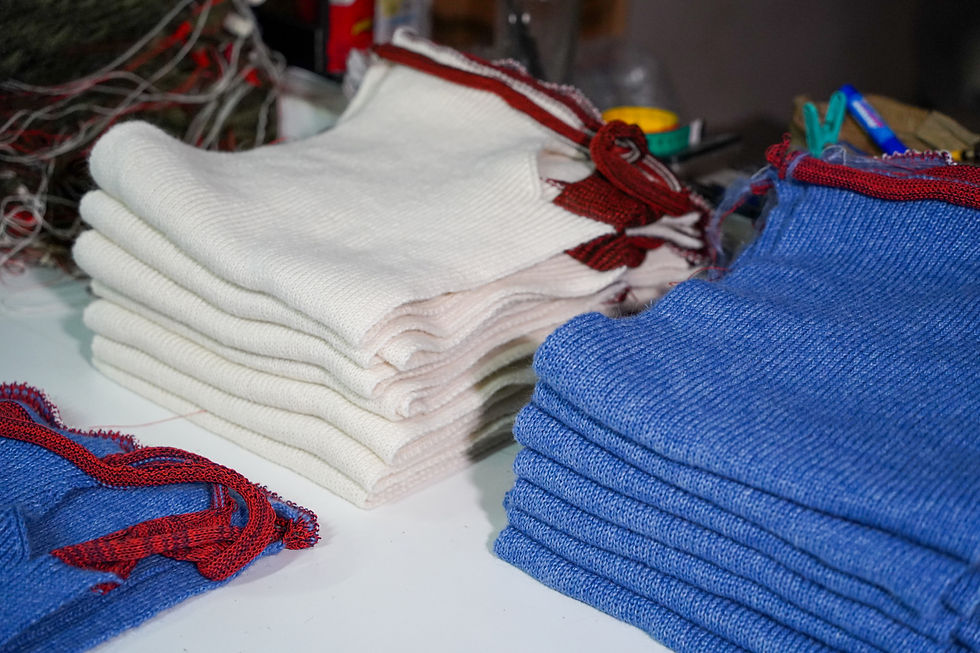
The Importance of Textile Testing in Modern Manufacturing
Textile testing is not only a technical quality control requirement. For brands and manufacturers, it is a way to reduce production risk before a product reaches the market.
A fabric that has not been properly evaluated may generate problems at different stages of the supply chain. Shrinkage can affect garment fit, low bursting strength can lead to premature damage, pilling can trigger consumer complaints, and poor color fastness can result in fading or color transfer.
Testing knitted fabric before production helps manufacturers make decisions based on measurable fabric performance rather than visual inspection alone. It can also support more consistent specifications, reduce avoidable rework, and improve the reliability of production batches.
At Knit-Lab Peru, the testing process includes standardized sample measurements, washing shrinkage evaluations, bursting strength assessments, pilling performance analysis, color fastness testing, and structural evaluations. These laboratory processes provide technical information that can be used during knitwear development and pre-production quality control.
Conclusion
Testing knitted fabrics is about more than meeting technical specifications. It is a way to verify how a textile is expected to perform throughout its lifecycle and to identify potential manufacturing risks before they affect a complete production lot.
The five methods discussed, dimensional stability, bursting strength, pilling resistance, color fastness, and fabric weight and structural analysis, provide a practical foundation for knitwear quality testing and manufacturing control.
By applying standardized textile testing processes during product development and pre-production, Knit-Lab Peru helps manufacturers evaluate fabric performance, verify material specifications, and improve consistency before knitted garments reach the market.

Article reviewed by Grace Wouters Huamanchumo, co-founder of Knit-Lab Peru and international knitwear industry specialist with over 10 years of experience working with fashion brands across the U.S., Europe, and Australia. Her expertise in sustainable manufacturing, strategic sourcing, and Fair Trade practices ensures the accuracy and relevance of the content published on this site.