Knitting in different cultures

Updated: Mar 4
Have you ever thought about how your cultural background might influence the way you use knitting needles? Knitting is far more than a technical skill—it is a living cultural language passed down through generations. Across the world, knitting traditions reflect geography, climate, available fibers, and deeply rooted social practices.
Today, these traditions also inspire custom knitwear manufacturing for brands seeking authenticity, sustainability, and handcrafted excellence.
Although the English style of knitting is widely known and used globally, there are many other styles—such as Continental, Arabian, Japanese, and Peruvian knitting, the ancestral technique preserved and practiced at Knit Lab Peru.
In this article, we explore how knitting styles vary across cultures, their advantages and limitations, and how heritage craftsmanship and sustainable materials are shaping contemporary knitwear production.

Knitting and cultural traditions
Knitting traditions are inherently geographical. Depending on the region, everything changes:
Stitch construction
Pattern symbolism
Fiber selection
Tools and techniques
These variables are not arbitrary; they respond to environmental needs and cultural identity.
Below are some of the most influential knitting traditions worldwide.
Nordic knitting
In Scandinavian countries, knitting is almost a cultural institution. Icelandic lopapeysa sweaters, Norwegian and Swedish jacquard patterns, and Fair Isle–inspired motifs are typically knitted in the round to provide superior thermal insulation.
Key characteristics:
Graphic, repeating motifs (snowflakes, stars, crosses)
High durability for extreme climates
Traditionally knitted with wool from local sheep breeds
According to the Nordic Textile Journal, these garments were historically designed to minimize yarn waste and maximize warmth, early examples of functional sustainability in textiles.
Andean knitting
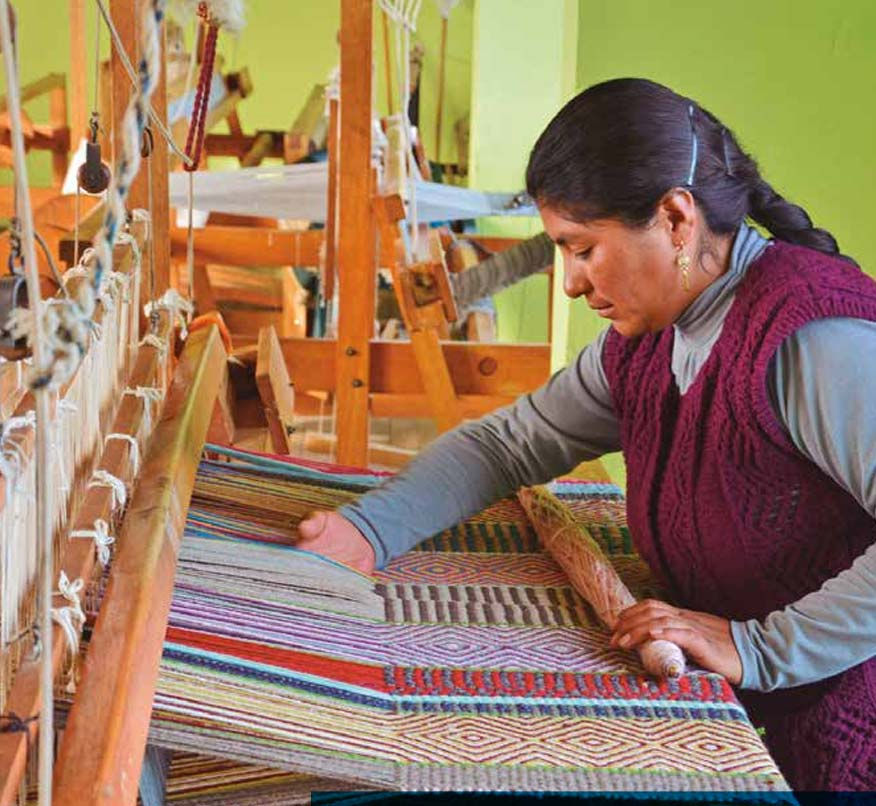
One of the most distinctive knitting traditions in the world is Andean knitting, deeply rooted in Quechua and Aymara cultures of Peru and Bolivia. In these communities, textiles function as storytelling tools, encoding identity, social status, and cosmology.
At Knit Lab Peru, we actively preserve and reinterpret these traditions through responsible, small-batch knitwear manufacturing.
Patterns and Symbolism
Traditional Andean motifs often depict:
Llamas and alpacas (symbols of abundance)
Mountains (Apus, sacred protectors)
Geometric representations of nature and seasons
These patterns are commonly executed using intarsia, stripes, and hand-controlled colorwork, requiring advanced technical skill.
Alpaca Wool: A Sustainable Andean Fiber
A cornerstone of Andean knitting is alpaca wool, a fiber native to the Peruvian highlands.
Why alpaca is exceptional:
Naturally soft and hypoallergenic
Thermoregulating (warm in cold climates, breathable in warmth)
Durable and resistant to pilling
Low environmental impact compared to cashmere or sheep wool
Alpacas have padded feet that do not damage soil, and their grazing patterns help preserve fragile ecosystems, making alpaca fiber a responsible and sustainable choice.
At Knit Lab Peru, we work with ethically sourced alpaca yarns, supporting local communities while reducing environmental impact.
Japanese knitting
Japan values slow and precise knitting techniques. It features elegant openwork stitches, a love of detail, and natural tones. Knitting is seen as a meditative art form.
English knitting
The English knitting style is commonly taught and used in Ireland and the USA, as well as in other English-speaking countries such as the UK, Canada, Australia, and New Zealand. This knitting style has prevailed in these countries for many years and is often the first style that beginners are taught when learning to knit. These countries have also been influential in the development and dissemination of knitting patterns and techniques on a global scale.
Because of its clarity and predictability, English knitting has played a key role in the standardization of modern knitting patterns distributed worldwide.
The Continental knitting style
This method is also known as picking or German knitting. Many knitters find that the Continental style allows for faster knitting because the working yarn is already in the correct position to make each stitch, reducing the need to move the yarn back and forth between hands.
One of the most significant advantages of the Continental style is that it allows for a broader range of stitch patterns than some other styles because the orientation of the stitches is different, ensuring more flexibility and creativity.
You can also read: A Brief History of Knitting
Craftsmanship
Beyond techniques, what truly differentiates knitwear is craftsmanship. At Knit Lab Peru, garments are not mass-produced, they are handcrafted by skilled artisans whose know-how has been refined over decades.
Our process emphasizes:
Manual knitting and finishing
Deep technical understanding of fibers and tension
Collaboration between designers and artisans
This human expertise ensures consistency, quality, and authenticity, qualities increasingly valued by premium fashion brands.
Textile Preservation and Cultural Responsibility
Knit Lab Peru plays an active role in textile preservation, safeguarding ancestral Andean techniques that are at risk of disappearing.
By integrating these techniques into contemporary knitwear collections, we:
Keep traditional knowledge economically viable
Support artisan communities
Bridge heritage craftsmanship with modern fashion needs
Organizations such as UNESCO recognize textile traditions as intangible cultural heritage, reinforcing the importance of preserving these practices through active use—not museum storage.
So which style is the best?
There is no better or worse style when it comes to knitting. It usually depends on where you are in the world and, of course, what you fancy the most.
At Knit Lab Peru, we combine:
Sustainability through responsible material sourcing
Craftsmanship through expert artisans
Textile preservation through ancestral techniques
Global expertise serving brands worldwide
Contact us today to start creating premium knitted garments for your brand!